
Precision Tools for Peak Performance
To provide the elite level of coaching you want, we must move beyond guesswork. I rely on objective data to understand your effort, recovery, and biomechanical efficiency. To train with me, you will need a GPS watch and—most importantly—a way to measure your Running Power.
Why Running Power?
While most runners rely on heart rate or pace, I coach using Running Power (Watts). I have personally used Stryd for over 10 years and have been coaching athletes with Stryd for the last 5 years. It is the most transformative tool in modern running.
Here is why it is a non-negotiable part of my clinical approach:
Elite Credibility
Running power is no longer a "secret" for the few. It is now the trusted metric for professional elites like Clayton Young (Olympic Marathoner), Dakotah Popehn (7th at Chicago Marathon), and Charlie Lawrence (Champion Ultramarathoner). They use it for the same reason we will: precision.
Clinical Accuracy
Heart rate is a "lagging" metric—it is affected by heat, stress, and caffeine. Power is "real-time." As a retired Doctor of Chiropractic, I value the immediate data that tells me exactly how much work your muscles are doing the second the terrain changes.
Perfect Pacing
Whether it's a 20mph headwind or a steep incline, 250 Watts is always 250 Watts. Stryd allows you to pace your race with a level of accuracy that pace-based running simply cannot match.
The Equipment List
To get started, you will need a GPS watch that supports Running Power. There are three ways to capture this data:
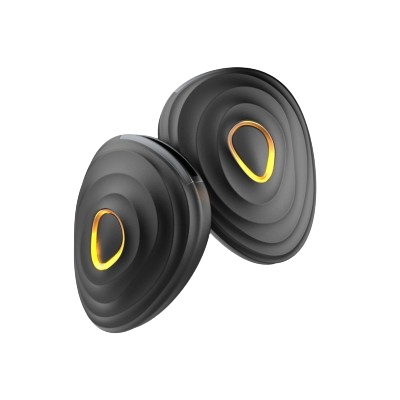
The Gold Standard: Stryd Next Gen Pod
The Stryd Pod is a small sensor that clips to your shoe. It is the only tool that accounts for air resistance (wind) and actual foot-strike dynamics.
Coach’s Recommendation: For all athletes, but especially in the Gold or Silver Medals, I highly recommend a dedicated Stryd pod. It provides the granular biomechanical data I need to help keep you injury-free.
The Gold Standard: Stryd Next Gen Pod
The Stryd Pod is a small sensor that clips to your shoe. It is the only tool that accounts for air resistance (wind) and actual foot-strike dynamics.
Coach’s Recommendation: For all athletes, but especially in the Gold or Silver Medals, I highly recommend a dedicated Stryd pod. It provides the granular biomechanical data I need to help keep you injury-free.
TrainingPeaks
Regardless of your gear, all athletes must have a TrainingPeaks account. This is our “digital lab.” It allows me to analyze your Stryd data, leave feedback on your workouts, and adjust your plan in real-time based on how your body is responding.
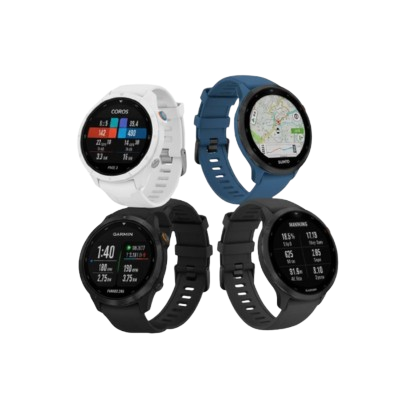
Native Wrist-Based Power (Built-in)
Most modern performance watches now calculate power directly from the wrist. While a pod is more accurate for wind and form, these are excellent "all-in-one" solutions.
Garmin:
Forerunner (255, 265, 955, 965, 970), Fenix (7, 8, E), Epix (Gen 2/Pro), Enduro (2, 3)
Apple:
Apple Watch Ultra (1 & 2), Apple Watch Series 6 through 10, and SE (2nd Gen)
COROS:
Polar:
Suunto:
Accessory-Based Power (Chest Straps)
If you have an older Garmin watch (like a Fenix 6 or Forerunner 945), you can add power data by pairing it with a specific accessory:
- Garmin HRM-Pro / HRM-Pro Plus (Chest Strap)
- Garmin Running Dynamics Pod (Waistband Clip)
TrainingPeaks
Regardless of your gear, all athletes must have a TrainingPeaks account. This is our “digital lab.” It allows me to analyze your Stryd data, leave feedback on your workouts, and adjust your plan in real-time based on how your body is responding.